Published November 16, 2026
Pack Books for Moving in Small Boxes, About 38 Pounds Each
Books weigh about 25 pounds per cubic foot. Use boxes of 1 to 1.5 cubic feet, lay the books flat or spine down, and each box stays near 25 to 38 pounds.
The costly mistake is filling a big box with books because they all fit. Books weigh about 25 pounds per cubic foot, so a large box packed full of them comes to about 113 pounds. The bottom lets go on the stairs, or your back does. To pack books for moving, use small boxes of 1 to 1.5 cubic feet and lay the books flat or spine down. Each box then lands between 25 and 38 pounds, and one person can carry it.
The second mistake is about money. Under basic coverage in Washington, a mover owes 60 cents a pound for a lost box. A 38 pound box of books is worth $22.80.
- Use the smallest moving box you can buy. A 1 cubic foot book box holds about 25 pounds of books. A 1.5 cubic foot small box holds about 38.
- Lay books flat with the biggest on the bottom, or stand them spine down. The Library of Congress gives both of those as the way to pack.
- Never pack a book with the spine up and the page edges down. The pages can pull out of the binding.
- Line the box with a trash bag in wet weather. Yale's library does this for its rare books.
- Tell your mover about collector's books before move day. Washington rules pay fair market value for those, even with replacement coverage.
- The Everett Public Library is not taking book sale donations, as of November 2026. Ask before you load the car.
What a Box of Books Weighs at Every Size
Most packing guides say books are heavy and stop there. I wanted the number. Engineer Harris Hyman gave one in the Journal of Light Construction in April 1995, in a piece on why bookshelves sag. He wrote that Architectural Graphic Standards puts books at 25 pounds per cubic foot. He also weighed his own engineering textbooks and got about 35 pounds for every foot of shelf.
So I ran the 25 pound figure through the standard box sizes. The volumes below are the ones from our post on how many moving boxes you need.
| Box | Volume | Full of Books | Use It for Books? |
|---|---|---|---|
| Book box | 1 cu ft | About 25 lb | Yes |
| Small | 1.5 cu ft | About 38 lb | Yes |
| Medium | 3 cu ft | About 75 lb | Half full, then light things on top |
| Large | 4.5 cu ft | About 113 lb | No |
The weights are my math, volume times 25 pounds. A box of thick textbooks will run heavier and a box of paperbacks lighter. Allied Van Lines says a box of books can weigh 30 to 40 pounds, which fits the small box row.
U-Haul rates both its small moving box and its book box to hold up to 65 pounds. Cardboard can take more than a person should. Just because the box will hold it does not mean you should lift it. A medium box packed solid with books would pass 65 pounds anyway.
The shelf figure helps you count boxes. As a worked example, take a bookcase 3 feet wide with 5 shelves. That is 15 feet of shelf. At Hyman's 35 pounds a foot for heavy hardcovers, the case holds about 525 pounds of books. At 38 pounds a box, that is 14 small boxes. So plan about one small box for each foot of shelf if your books are big hardcovers, and fewer if they are paperbacks.
Flat or Spine Down, Never Page Edges Down
The popular guides do not agree on this. Allied says not to lay books flat and to stand them up like they sit on a shelf. This Old House says to stack paperbacks flat and stand hardcovers upright with the spines facing out.
The people whose job is keeping books alive for a hundred years say something else. The Library of Congress says to pack books flat with the heavier and larger volumes at the bottom, or to pack them vertically, spine down. Yale University Library ships its special collections spine down, side by side, with filler in the gaps, and packs oversized books flat.
I side with the libraries.
- Flat. Best for paperbacks, art books and anything oversized. Biggest and heaviest on the bottom, stacks the same height.
- Spine down. Good for hardcovers of about the same height. The spine rests on the bottom of the box and the page edges point up.
- Upright, like on a shelf. Fine for a short local move if the row is snug and cannot lean.
- Spine up. Skip it. The Northeast Document Conservation Center says a book kept spine up can have its pages pull out of the binding from their own weight. A bumpy truck ride does not help.
Whichever way you choose, do not mix them in one layer. A leaning book is a bent book.
Pack a Box of Books in This Order
- Tape the bottom twice. U-Pack's book moving guide calls for at least two layers of packing tape on the bottom. I run one more strip across the seam the other way.
- Pad the bottom. A layer of crumpled packing paper gives the bottom row a cushion.
- Sort by size first. Books of the same height support each other. Small books cannot hold up big ones.
- Load the biggest books first. Flat on the bottom, or spine down in a tight row.
- Keep the weight in the middle. The Library of Congress says to center the weight in the box, pad out empty space and avoid overpacking.
- Fill the gaps. Paper, a towel or a sweater goes in any space where a book could slide. Close the flaps and rock the box. Nothing should move.
- Lift it before you tape it. If you would not carry it down a flight of stairs, take a few books out.
- Label it. Write Books, the room, and Heavy on two sides.
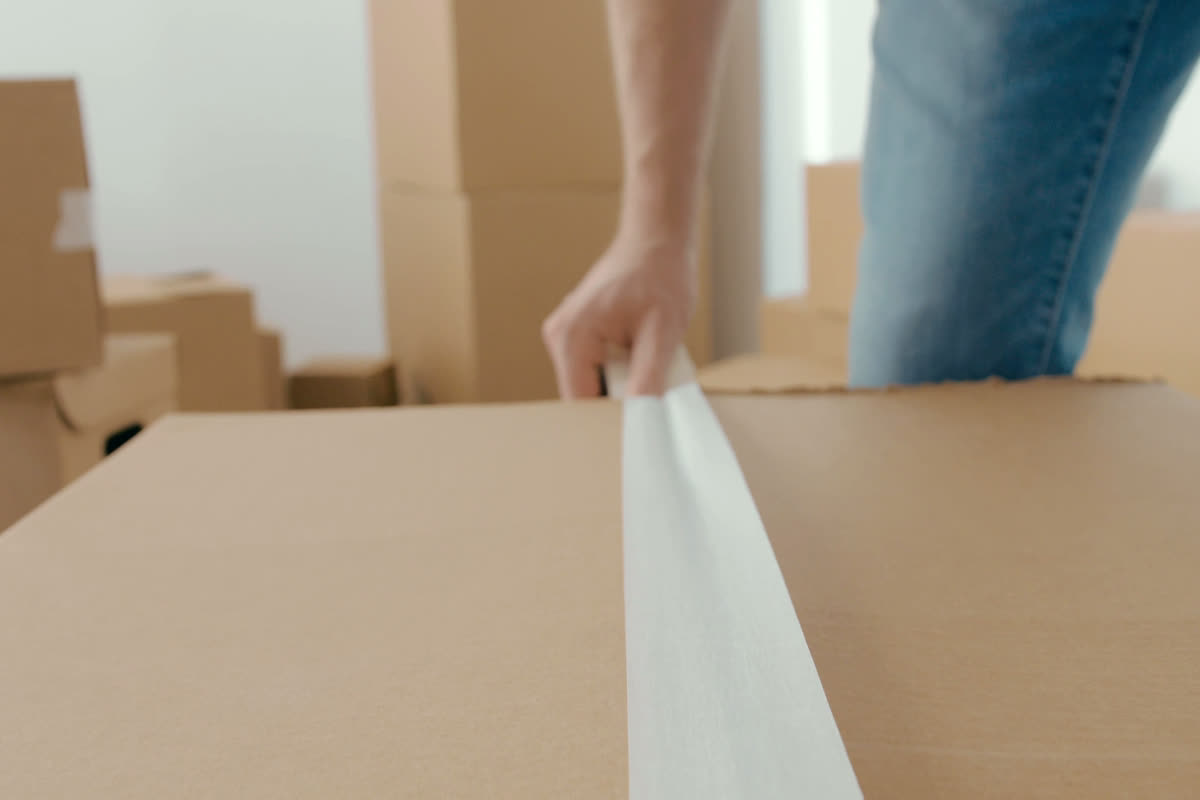
Rare or signed books get one more step. Yale wraps each bound item in clean paper, then in bubble wrap, and puts the tape on the bubble wrap only so it never touches the book.
Keep Everett Rain Out of the Paper
Cardboard and paper both drink water, and November in Everett is wet. Yale lines the outer container with a large, clean, heavy duty trash bag and seals it once the books are in. Its guide calls this an important step when collections ship in bad weather.
You can do the same at home. Open a trash bag inside the box, pack the books into the bag, then twist the top and tape it down before you close the flaps.
Take the bag off when you unpack. The Library of Congress says plastic is useful as a second line of defense against water, but that a plastic container in a humid place raises the risk of mold. It also says not to keep books you care about in a basement, attic or garage. So stage book boxes inside the house, not in the garage, and unpack them early.
If a box does get wet, the Library of Congress says to set the books out to air dry right away. Books that cannot be dried within two days should be frozen until you can deal with them.
Our post on moving in the rain in Everett covers the rest of a wet move day.
What a Lost Box of Books Pays in Washington
No book packing guide I read covers this. Washington's Tariff 15-C is the state rulebook for household goods movers, and it covers moves inside the state. Item 90 sets what a mover owes when something is lost or damaged.
- Basic coverage pays by weight. It is 60 cents a pound per item at no extra cost. A 38 pound box of books pays $22.80. A 25 pound box pays $15.
- You packed it, so breakage is on you. The carrier is not liable for breakage in a box you packed, unless you can prove the mover was careless with it.
- Replacement coverage costs extra. You can choose it with a $300 deductible or with none. Ask what it costs before move day.
- Collector's books are a special case. Antiques and collector's items go back to depreciated or fair market value, even with replacement coverage. You must tell the mover about them before the move starts, and the mover must list them on a separate inventory.
- Mold is not covered when it comes from conditions that were there before pickup. A box that was damp when you taped it is yours.
- Claims have a clock. You get nine months after delivery to file a written claim.
Item 90 also says the carrier is not responsible for the condition of furniture made of pressboard or particle board. Many bookcases are. Empty the case all the way, take out any loose shelves, and bag the shelf pins.
My advice is simple. First editions, signed copies and family Bibles ride in your own car.
Boxes, Bins and the Mail
A book box is cheap. As of November 2026, U-Haul lists its small box at $1.85 and its book box at $1.79 when you buy one at a time. A Washington mover can sell you a carton under 3 cubic feet for $2.08 to $10.35 on a local move, under Item 225 of the tariff. Item 225 also lets you buy used cartons at half price when the mover has them.
Plastic bins work too, in the same small size. The tariff lets movers rent reusable plastic containers for $1.37 to $12.41 a week. They do not sag in the rain, which is worth a lot here. Keep them small, because a big tote full of books is the same 113 pound problem with handles.
For a long distance move, some boxes are cheaper to mail. USPS Media Mail is the book rate. It covers books of at least eight printed pages with no advertising, under the postal rules. These prices come from the USPS price list that took effect October 4, 2026.
| Box Weight | Media Mail Price |
|---|---|
| 25 lb | $22.07 |
| 38 lb | $31.65 |
| 70 lb, the most the chart lists | $55.23 |
A mailed box gets handled many times, so pad it well. Media Mail makes sense for a few boxes going to a kid at college or to a new home in another state. For a local move it does not.
Thin the Shelf Before You Pack It
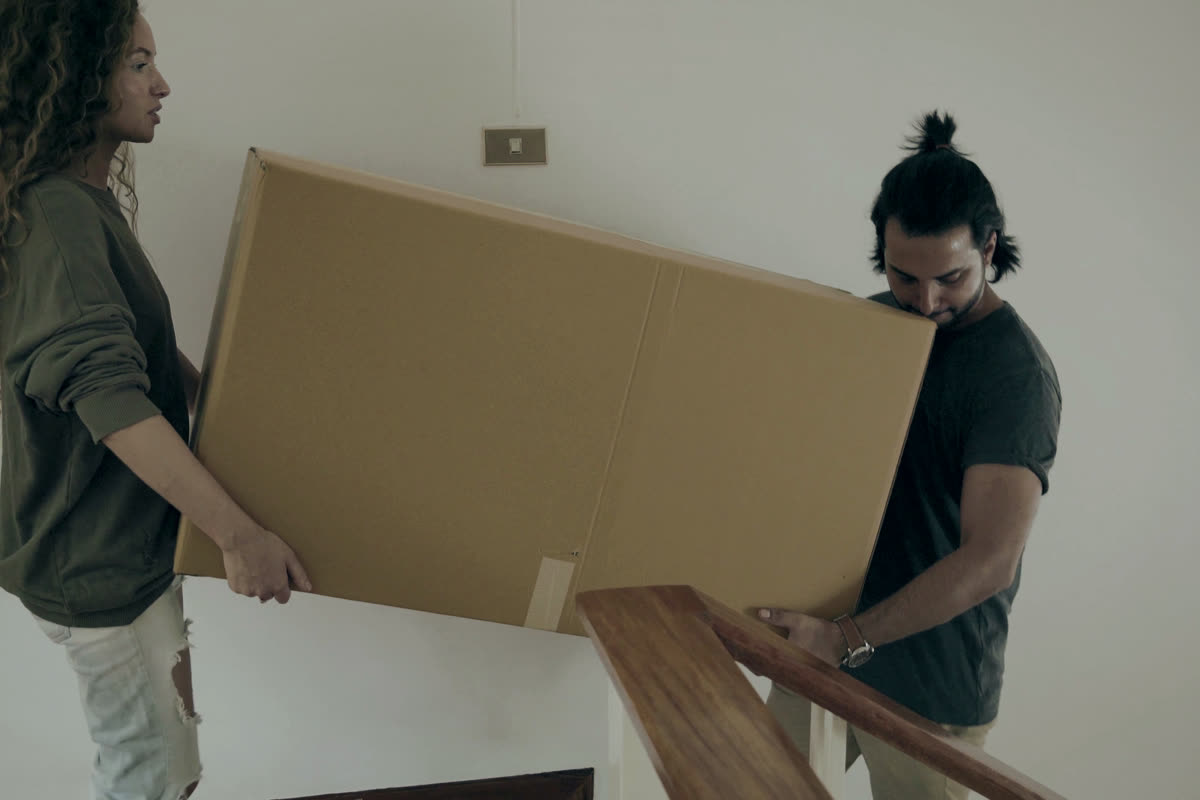
Every small box you do not pack is 38 pounds nobody carries. Pull the books you will not read again before you tape a single box.
Do not drive them to the downtown library, though. The Everett Public Library says it is not able to accept donated items for its book sale because of a significant backlog, as of November 2026. Sno-Isle Libraries has a donation policy that says it may accept donated materials and that staff decide what to take. Phone the branch before you load the car. This Old House also suggests schools and charities.
Books are the best thing in the house to pack yourself. They do not break, and the work is simple once the boxes are small. Save the paid packing hours for the kitchen. Our packing help is billed at the same $185 an hour as the move, and our dish packing guide shows why the kitchen is where a crew earns it. Rates for a local move are on our pricing page.
Fair Questions
- Should you pack books flat or upright?
- Flat or spine down. The Library of Congress says to pack books flat with the heavier and larger ones at the bottom, or vertically with the spine down. Upright like a shelf is fine for a short move if the row cannot lean.
- What size box to pack books for moving?
- A book box of 1 cubic foot or a small box of 1.5 cubic feet. At 25 pounds per cubic foot, those come to about 25 and 38 pounds when full of books.
- What is the easiest way to move a lot of books?
- Thin the shelf first, then pack small boxes and roll them out on a hand truck four or five at a time. Plan about one small box for each foot of shelf if the books are big hardcovers.
- How heavy should a box of books be?
- Keep it to what one person can carry down stairs. I aim for 25 to 40 pounds. U-Haul rates its book box to hold up to 65 pounds, but the box holding it does not mean you should lift it.
- Can you pack books in plastic bins?
- Yes, in small bins. They keep rain out better than cardboard. Do not leave books sealed in plastic for long in a damp garage. The Library of Congress says that mix raises the risk of mold.
- How do you pack books without boxes?
- A rolling suitcase carries a short shelf of books well because the wheels take the weight. Small plastic bins work too. Skip trash bags alone, since they tear and give the books no support.
- Will movers pay for damaged books in Washington?
- Basic coverage pays 60 cents a pound, about $22.80 for a 38 pound box. If you packed the box yourself, the mover is not liable for breakage unless you can prove the mover was careless.
Works Cited
- Library of Congress, Preservation FAQ, Books
- Yale University Library, Transportation of Special Collections Materials, Packing and Preparing Materials
- Northeast Document Conservation Center, Leaflet 4.1, Storage Methods and Handling Practices
- Harris Hyman, P.E., Down With Sagging Shelves, Journal of Light Construction, April 1995
- Washington Utilities and Transportation Commission, Tariff 15-C, effective January 1, 2026
- USPS, Notice 123 Price List, effective October 4, 2026
- USPS, Domestic Mail Manual 173, Media Mail and Library Mail
- Everett Public Library, Support Your Library
- Sno-Isle Libraries, Donation Policy
- U-Haul, Book Box for Moving and Storage
- This Old House, How To Pack Books for Moving, updated June 2026
- Allied Van Lines, How to Pack Books for Moving
Choose Everett Local Movers in Google's preferred sources