Published November 4, 2026
Moving in the Rain in Everett Without Soaking a Box
Wrap the boxes before they go outside, stage them in a dry spot by the door, and keep the walk to the truck short. Anything that does get wet should be opened and dried within two days.
The costly mistake on a wet moving day is trusting plain cardboard to hold up. A box that sat in a damp garage and then rides through the rain gets weaker, and the boxes on the bottom of the stack are the first to crush. Wrap or bag the boxes before they go outside, stage them dry at the door, load the heavy pieces first, and open anything damp within two days.
In Everett you will almost never get a dry week to wait for in the winter. So plan to move in the rain, and plan it well.
- November, December and January bring about 14 inches of rain to Everett, close to 40 percent of the year's total.
- Cardboard loses stacking strength as it takes on moisture. At 80 percent humidity, the loss can be about a third.
- Bag soft things, stretch wrap furniture, and seal the mattress in a plastic bag.
- Set up a dry staging spot inside the door and keep one crew inside and one outside.
- Back the truck as close to the door as you can. Every extra step is another minute in the rain.
- Open and dry anything damp within 24 to 48 hours. That is the window the EPA gives to stop mold.
Everett Rain by the Month
The Western Regional Climate Center keeps the long record for its Everett weather station, from 1894 to 2016. It puts the average year at 35.71 inches of rain. December is the wettest month at 4.96 inches, then November at 4.65 and January at 4.51. July is the driest at 1.04 inches.
Add up those three winter months and you get 14.12 inches. That is about 40 percent of the whole year falling in a quarter of it.
Snow is rare but not zero. The same record averages 7.3 inches a year, and most of it lands in December and January. A snowy day is a different job. Rain is the normal one.
Watch the forecast for the big storms. NOAA says its research helps the National Weather Service warn of heavy rain and floods from atmospheric rivers five to seven days out. If one is on the way for your date, call your movers that week, not that morning.
Why Wet Cardboard Fails
Cardboard does not have to get soaked to fail. It only has to get damp.
Roman Popil, a paper scientist at Georgia Tech, writes that a 10 point rise in humidity cuts a box's stacking strength by about 10 percent. He points to Fibre Box Association loss factors that show about a 32 percent loss at 80 percent humidity.
That matters on a truck. The box on the bottom of a stack holds up every box above it. Lose a third of its strength and the stack leans, the bottom box folds, and the dishes inside take the hit.
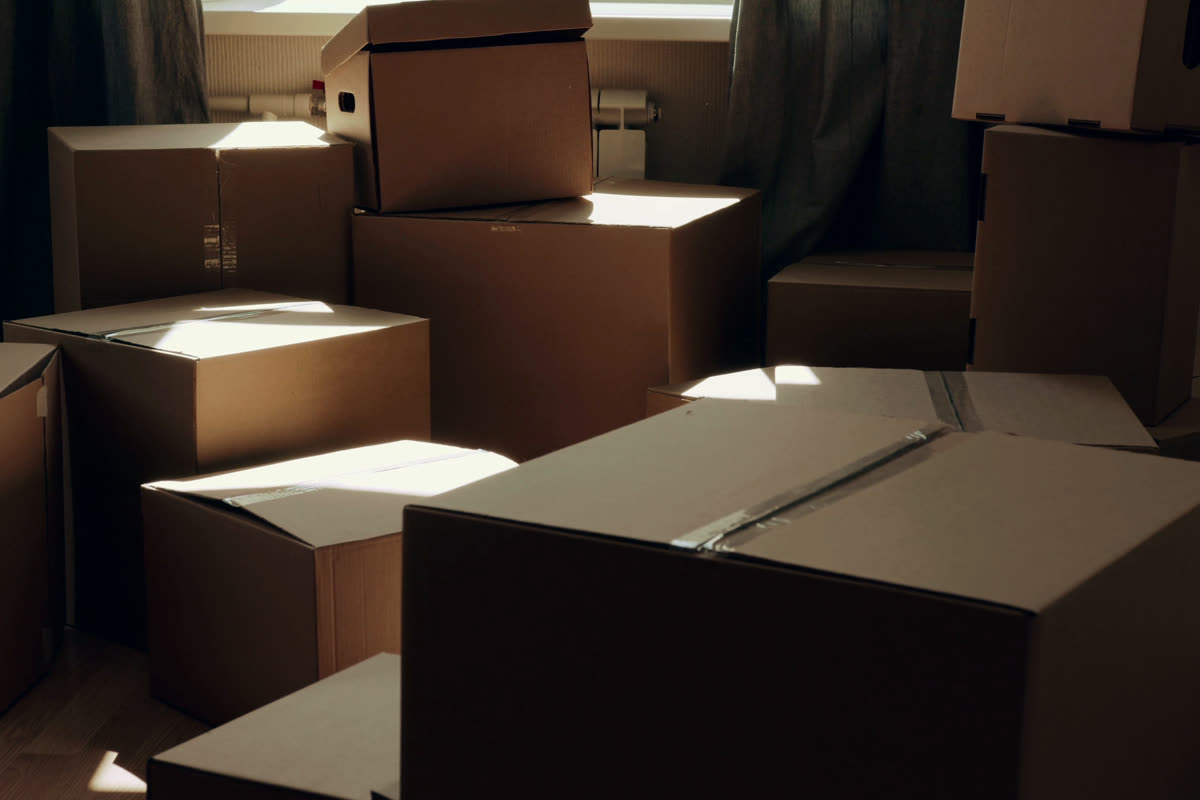
So keep packed boxes inside the house until the truck is ready, not out in a garage or on a porch overnight. Tape every seam on the bottom, not just the middle. Put the heaviest boxes, like books and kitchen gear, in sturdy small boxes. Our post on how many moving boxes you need breaks the sizes down by room.
What to Wrap and How
Not everything needs the same cover. Wood and fabric soak up water. Metal and plastic wipe dry. U-Haul suggests stretch wrap on dressers, chairs and boxes because it can be wiped dry after loading.
| Item | Cover | Why |
|---|---|---|
| Cardboard boxes | Stretch wrap, or a trash bag over the top | Keeps the box dry so it keeps its strength |
| Clothes and bedding | Trash bags, tied shut | Fabric soaks up water fast |
| Mattress | Sealed plastic mattress bag | A damp mattress is hard to dry all the way through |
| Wood furniture | Moving pad, then stretch wrap over it | The pad guards the finish and the wrap keeps the pad dry |
| Upholstered couch and chairs | Plastic cover or stretch wrap | Cushions hold water like a sponge |
| TV and computers | Original box or a TV box, then plastic | Electronics and water do not mix |
| Metal and plastic items | Nothing extra | Wipe them dry on the truck |
Use clean bags with no scent. A bag of clothes is also easier to carry than a box of clothes, and it does not fall apart in the rain.
Wrap things the night before if you can. Wrapping in the doorway while the crew waits is slow, and on an hourly job slow costs money. Our packing service can do the wrapping and packing ahead of the move.
Set Up the Carry Before the First Box Moves
The goal is less time outside for every item. That comes from setup, not speed.
- Back the truck as close to the door as it can safely go. U-Haul says to use a covered entry or garage if you have one.
- Make a dry staging spot just inside the door. U-Pack suggests a covered staging area so items wait out of the rain.
- Put down floor covers and towels at both homes. Muddy boots on carpet are a cleaning bill nobody wants.
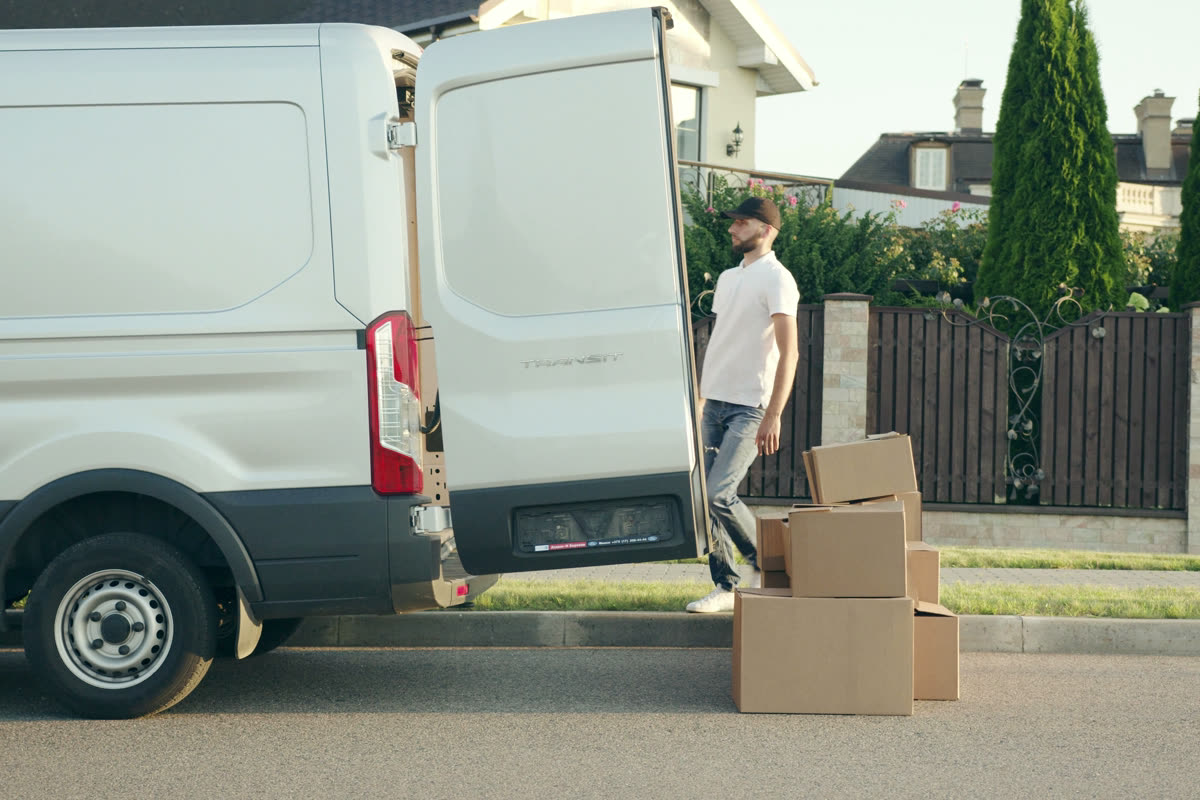
- Split the crew. One group stays inside and brings items to the door. One group stays outside and carries to the truck. U-Haul and U-Pack both suggest it, and it keeps mud out of the house.
- Lay a pad or mat on the truck floor and ramp for footing.
- Load heavy, water tolerant pieces first, like the washer and metal shelves. Load the wrapped fragile items last, as U-Haul suggests.
Wear shoes with real grip. A wet ramp is slick, and a slip with a dresser is how people get hurt. Take it slower than you would on a dry day.
When to Wait It Out
Light rain is a normal Everett moving day. Some weather is not.
U-Pack says to stay off the job in a severe storm with lightning or hail. U-Haul says to think about putting the move off when the rain is heavier than a light shower, like a thunderstorm. High wind is the other one. Wind turns a mattress or a sheet of plywood into a sail on the ramp.
If the bad weather is only a few hours, ask your movers about a later start. Our post on what time movers arrive covers how start times work. If it is a whole day of storm, move the date, and do it early in the week so you have choices.
Dry Anything That Got Wet Within 48 Hours
Something will get damp. Deal with it the first night, not the first weekend.
The EPA says to dry water damaged areas and items within 24 to 48 hours to prevent mold. It also says to keep indoor humidity below 60 percent, and ideally between 30 and 50 percent.
- Open any box that feels soft or looks dark at the bottom. Move what is inside to a dry box.
- Take clothes and bedding out of damp bags and run them through the dryer.
- Pull the cushions off a damp couch and stand them up with air around them.
- Wipe wood furniture dry right away. Do not leave stretch wrap on wood that went on wet.
- Run the heat and a fan, or a dehumidifier if you have one.
- Give damp electronics time to dry before you plug them in.
I think the wet mattress is the one to watch most. It is thick, it dries slowly, and you sleep on it the same night. Seal it before it leaves the house.
What Rain Does to the Bill
Rain slows a move down. On an hourly job, time is the bill.
Our rate is $185 an hour for 2 movers and a truck, with a 3 hour minimum. As a worked example, if wrapping in the doorway and a long wet walk add 30 minutes, that is about $92.50 more. Wrapping the night before and parking close is how you keep that money.
| What | Cost |
|---|---|
| 2 movers and a truck | $185 an hour, 3 hour minimum |
| Small jobs | From $299 |
| Miles | First 15 free, then $2 a mile |
| Pads, stretch wrap, straps and dollies | Come with the truck |
See the full moving prices for more on how the clock runs.
Book a Wet Weather Move With Us
Pads, stretch wrap, straps and dollies come with our truck, so the wrapping gear is covered. Text both addresses and your date to (425) 375-7447 for a quote.
Fair Questions
- Do movers still move in the rain?
- Light rain is a normal winter day in Everett, so plan for it. U-Haul says to think about putting a move off when the rain is heavier than a light shower, and U-Pack says to avoid severe storms with lightning or hail.
- How do you keep boxes dry when moving in the rain?
- Keep them inside until the truck is ready, wrap them in stretch wrap or cover them with trash bags, and stage them at the door. Load them fast with one crew inside and one outside.
- Will wet cardboard boxes break?
- They can. A Georgia Tech paper scientist writes that a 10 point rise in humidity cuts box stacking strength by about 10 percent, and the loss reaches about a third at 80 percent humidity.
- What is the rainiest month to move in Everett?
- December, at 4.96 inches on average, then November at 4.65 and January at 4.51, per the Western Regional Climate Center's Everett record. July is the driest at 1.04 inches.
- What should I do if my furniture gets wet during a move?
- Unwrap it and dry it the same day. The EPA says to dry wet items within 24 to 48 hours to stop mold. Stand cushions up, wipe wood dry, and run heat or a dehumidifier.
- Does rain make movers cost more?
- Our posted prices have no rain fee, but rain can slow the job, and hourly moves are billed by the clock. Wrapping ahead and parking close keeps the hours down.
Works Cited
- Western Regional Climate Center, Everett, Washington Monthly Climate Summary
- NOAA, What Are Atmospheric Rivers?
- Roman E. Popil, Georgia Tech, Effects of Moisture Content on Box Compression Strength
- U.S. EPA, A Brief Guide to Mold, Moisture and Your Home
- U-Haul, Tips for Moving in the Rain
- U-Pack, Moving on a Rainy Day
Choose Everett Local Movers in Google's preferred sources